
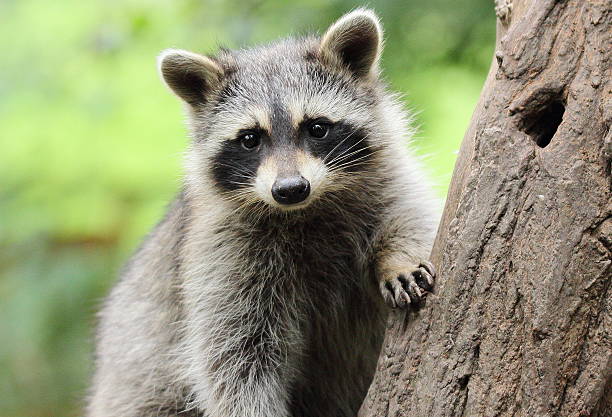
It's 7:00 AM on a Tuesday morning in October. You're heading to your car with your coffee when you notice something's wrong with your front lawn. Really wrong.
Large chunks of turf are peeled back like someone lifted carpet squares. Divots and holes are everywhere—dozens of them. Your previously decent lawn looks like a construction site. And there, waddling away without a care in the world, is a raccoon. Or maybe you see a murder of crows picking through the grass like they're at an all-you-can-eat buffet.
This is one of the most frustrating lawn problems in Seattle, and it happens to thousands of King County homeowners every fall. The worst part? You didn't do anything wrong. Your lawn was fine yesterday.
Here's what's actually happening—and the specific solution that stops it.
Raccoons and crows aren't attacking your grass. They're hunting for what's underneath: European crane fly larvae, also called leather jackets. These grubs live in your soil, feeding on grass roots from September through May.
To a raccoon or crow, your lawn isn't property—it's a grocery store. And in Seattle's mild fall climate, that grocery store is open 24/7.
The damage timeline: Most raccoon and crow damage happens between late September and early December, with a second wave in February and March. This matches exactly when crane fly larvae are most active near the soil surface and easiest for animals to detect.
Why your lawn, not your neighbor's: If raccoons or crows are hitting your property repeatedly, you have a significant grub infestation. Healthy lawns with minimal grubs don't attract this kind of attention. Animals are opportunistic—they return to spots with abundant food and ignore lawns without it.
In Seattle, the primary culprit is the European crane fly. The adults look like giant mosquitoes (but don't bite) and emerge in late August and September. Females lay 200-300 eggs directly on your lawn. Those eggs hatch into brown-gray, wormlike larvae about 1-1.5 inches long that feed on grass roots all fall and winter.
One lawn can have 200+ grubs per square foot in severe infestations. At that density, raccoons can smell them easily, and crows can spot the weakened, slightly yellow patches of grass that indicate grub damage underneath.
The Seattle-specific problem: Our mild winters mean crane fly larvae stay active almost year-round. Unlike most of the country where grubs die in freezing temperatures, Seattle grubs keep feeding through December, January, and February. This creates sustained wildlife pressure on lawns for 6-8 months straight.
European crane flies aren't native to the Pacific Northwest—they were accidentally introduced in the 1960s. But Seattle's climate is basically paradise for them. We have:
Mild winters that keep larvae alive and active when they'd freeze elsewhere
Wet fall and spring conditions that crane flies need to complete their life cycle
Mature trees and shade in neighborhoods like Ballard, Queen Anne, Magnolia, and Capitol Hill where grass is already stressed
No natural predators that effectively control crane fly populations the way they're controlled in Europe
The result? Seattle lawns are ground zero for crane fly infestations—and the raccoon and crow damage that follows.
Raccoon damage: Large sections of turf completely peeled back or rolled up like sod. Raccoons use their front paws to lift turf in search of grubs underneath. The damage looks systematic, like someone intentionally removed sections of lawn. Most raccoon activity happens at night, so you discover it the next morning.
Crow damage: Smaller holes and divots scattered across the lawn, usually in a pecking pattern. Crows work during the day, often in groups. You'll see them actively working your lawn, stabbing their beaks into soft soil to extract grubs.
Combined damage: Many Seattle properties get hit by both—raccoons tear up large sections overnight, then crows work over the disturbed areas the next day, making the damage worse.
The frustration cycle: You repair the damage, roll the turf back down, reseed bare spots. Two weeks later, they're back. Why? Because you fixed the lawn but not the grub problem. The food source is still there.
Stopping raccoon and crow damage requires addressing the root cause (literally). You need to eliminate the grub population AND repair the damaged turf so it doesn't become a recurring problem.
Timing is critical: June or July is the most effective time to apply grub control products in Seattle. This is when newly hatched crane fly larvae are small, close to the surface, and most vulnerable. Treating in June or July prevents the fall and winter damage before it starts.
Fall/winter treatment (if you're already under attack): If you're reading this in October or November with active damage, you can still treat grubs. Fall applications are less effective than summer treatment but will reduce populations enough to minimize further damage. Use products specifically labeled for crane fly larvae control.
Spring treatment: March and April are your second chance to treat before larvae pupate into adult flies in late spring. This prevents next generation from establishing.
Professional application cost: $0.08-0.15 per square foot for grub control treatment. A 5,000 square foot lawn costs $400-750 depending on product used and severity of infestation.
After grub treatment, you need to repair the physical damage:
Roll damaged turf back down immediately: If raccoons just peeled back sections overnight, roll the turf back into place, water thoroughly, and weight it down with boards or heavy objects for 3-5 days. Grass has a decent chance of reattaching if you act within 24-48 hours.
Overseed bare patches in September: For areas where turf is completely destroyed, rake smooth, add topsoil if needed, and overseed in late September. Fall is the best time to establish new grass in Seattle—natural fall rains handle watering, and cool temperatures prevent weed competition.
Aerate and overseed the entire lawn: If grubs have thinned your turf (even without visible animal damage), aerate and overseed in September. Thick, healthy grass is more resilient to grub feeding and doesn't attract as much wildlife attention.
Walk through neighborhoods like Laurelhurst, Montlake, or Madison Park and you'll notice: some lawns have severe raccoon damage, while the property next door is untouched. The difference isn't luck.
Healthy, thick turf resists grub establishment. Properly fertilized lawns (April-May and September applications) grow dense turf that makes it harder for adult crane flies to lay eggs at the soil surface. Thin, weak grass provides easy access.
Regular maintenance reduces grub populations. Lawns that get consistent care—mowing, fertilizing, aeration, overseeding—simply don't develop the severe grub infestations that attract wildlife. These lawns might have 10-20 grubs per square foot (normal background levels) instead of 200+.
Preventative grub treatment in June/July stops the cycle. Properties that apply grub control every June don't have fall and winter wildlife damage. It's that simple. You're interrupting the crane fly life cycle before larvae get large enough to attract attention.
You've probably seen recommendations for motion-activated sprinklers, predator urine, or ultrasonic devices. Here's the honest truth after 30+ years caring for Seattle lawns:
Deterrents don't work if the food source remains. Raccoons are incredibly persistent when hunting for grubs. They'll work around sprinklers, ignore scents, and return night after night as long as grubs are present. Crows completely ignore deterrents once they've identified a feeding site.
Your neighbor's lawn becomes the alternative. Even if you successfully scare wildlife away from your property, they just move to the next lawn with grubs. The problem isn't solved—it's relocated.
The only reliable solution is grub elimination. Remove the food source, and wildlife stops visiting. It's not complicated, just requires addressing the actual problem instead of the symptom.
If you're currently under attack (October-December):
If you're planning ahead (spring/summer):
Long-term maintenance: Once you break the cycle with initial grub treatment and turf repair, annual June grub control keeps populations low. Most Seattle lawns need annual treatment to prevent reinfestation—crane flies are too established in our region to eliminate completely.
Imagine walking out next October and your lawn looks exactly like it did in September. No torn-up sections, no divots, no 7 AM surprises. Your neighbors are dealing with raccoon damage for the third year in a row, but your lawn stays intact.
That's what happens when you address grubs before wildlife discovers them. Your lawn isn't more interesting or less appetizing—it simply doesn't have the food source that attracts attention in the first place.
The alternative? Spending every fall repairing damage, reseeding bare spots, and watching wildlife undo your work week after week. The cost of repeated repairs quickly exceeds the cost of proper grub control.
We're scheduling June and July grub control applications for Seattle-area properties now. Homeowners who treat in summer don't deal with fall wildlife damage—it's that straightforward.
Call (206) 440-8085 or email info@greengardenlandscaping.com to schedule grub control treatment. Mention this article and we'll include a free lawn assessment—we'll check your current grub levels, identify any existing damage, and recommend the specific treatment your property needs.
If you're currently dealing with active raccoon or crow damage, we can treat grubs and repair turf in the same visit. Your lawn doesn't have to look like a construction site until spring.




.png)